Some of the objects in this space are linked. If you choose to bring them into your world, I may receive a small commission — at no extra cost to you.
There are spaces that feel slightly wrong, even when everything looks “fine”.
You clean. You rearrange.
You add something new, hoping it will fix the feeling.
But it doesn’t.
Because the problem is not always visible.
Sometimes, it’s the way a space interacts with your nervous system — quietly, constantly, without asking for your attention.
1. Overstimulation Is Often Invisible
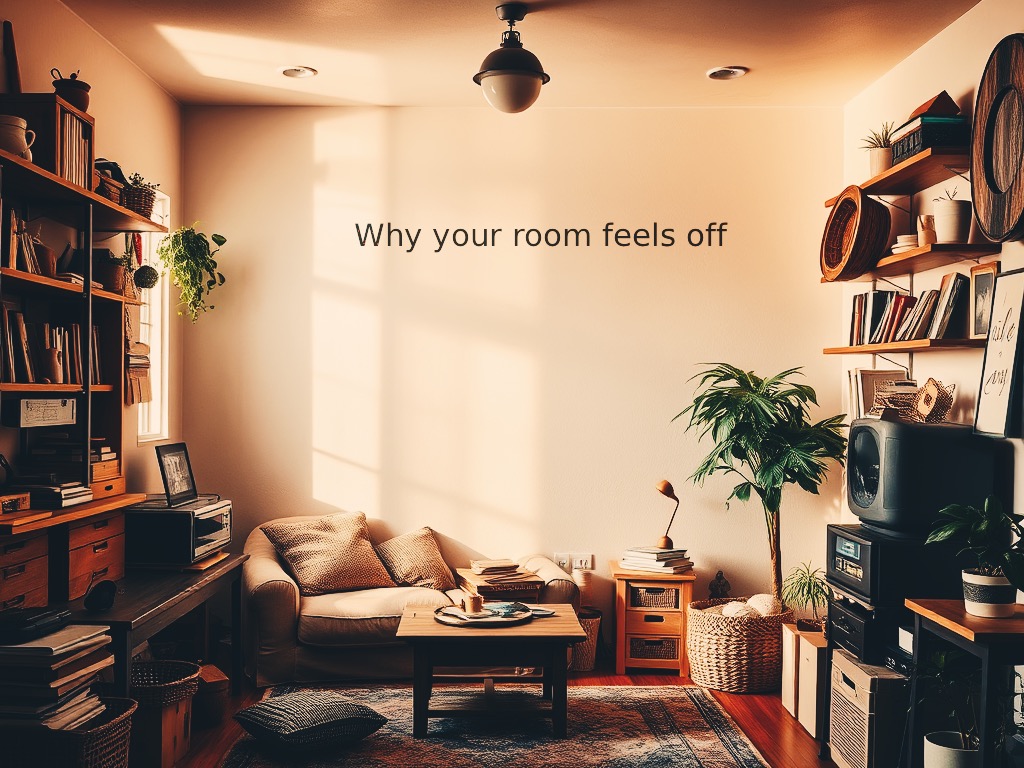
Most rooms are not designed for calm.
They are filled with:
- sharp lighting
- too many objects
- visual contrast
- constant micro-distractions
None of these are “wrong” on their own.
But together, they keep your brain slightly alert.
Not enough to notice.
Enough to never fully relax.
2. Lighting That Keeps You Awake
Light is not just functional.
It’s biological.
Cool, bright light signals:
stay alert
Warm, indirect light signals:
you can slow down
If your room is lit like an office,
your body will treat it like one.
Even at night.
3. Visual Noise = Mental Noise
Every object in a room asks for attention.
Even if you’re not consciously looking at it.
Clutter is not just physical.
It’s cognitive load.
A space doesn’t need to be empty.
It needs to be quiet enough.
4. Lack of a “Safe Point”
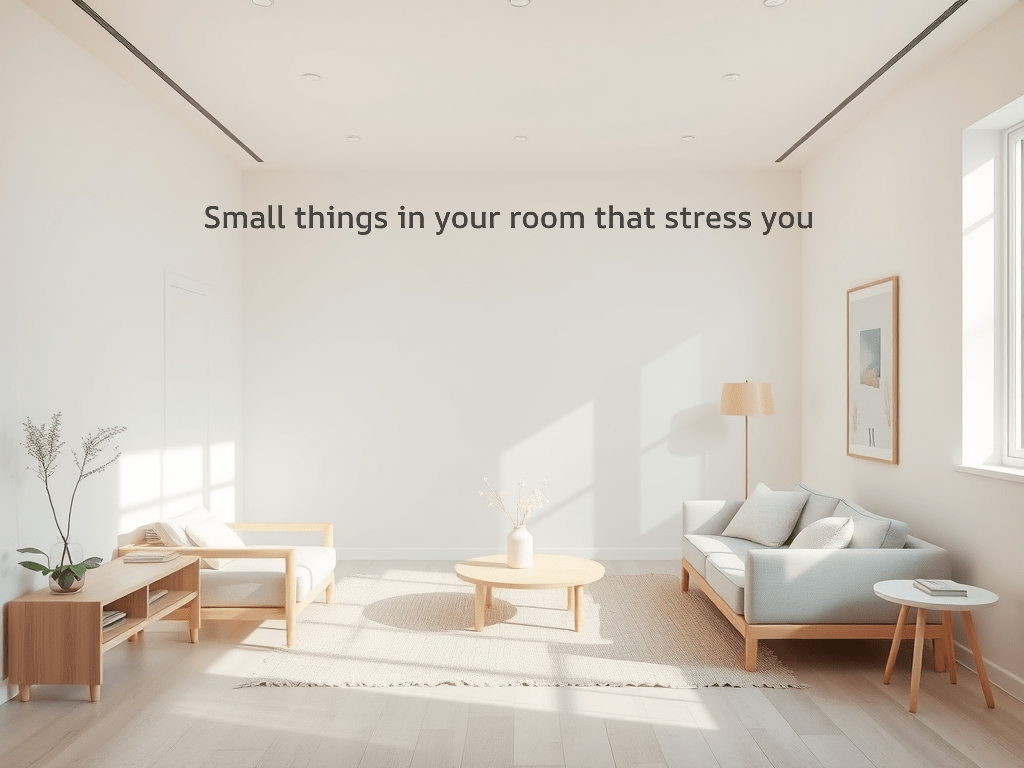
Most rooms don’t have a center.
Nowhere to settle.
No corner that tells your body:
stay here, you’re okay
Without that, your attention keeps moving.
And so does your tension.
5. Small Fixes That Change Everything
You don’t need a full redesign.
Start small:
- replace one harsh light with a warm lamp
- remove 2–3 unnecessary objects
- add one soft texture (blanket, rug)
- create one intentional corner
These are not aesthetic changes.
They are signals.
Objects That Support Calm (Subtle, Not Obvious)
Instead of adding more, choose better:
Not to decorate the space.
But to shift how it feels.
A Final Thought
If a space makes you feel slightly tense,
there is usually a reason.
Not dramatic. Not obvious.
But real.
And once you start noticing it,
you can start changing it.
 The Inner Room
Σχολιάστε