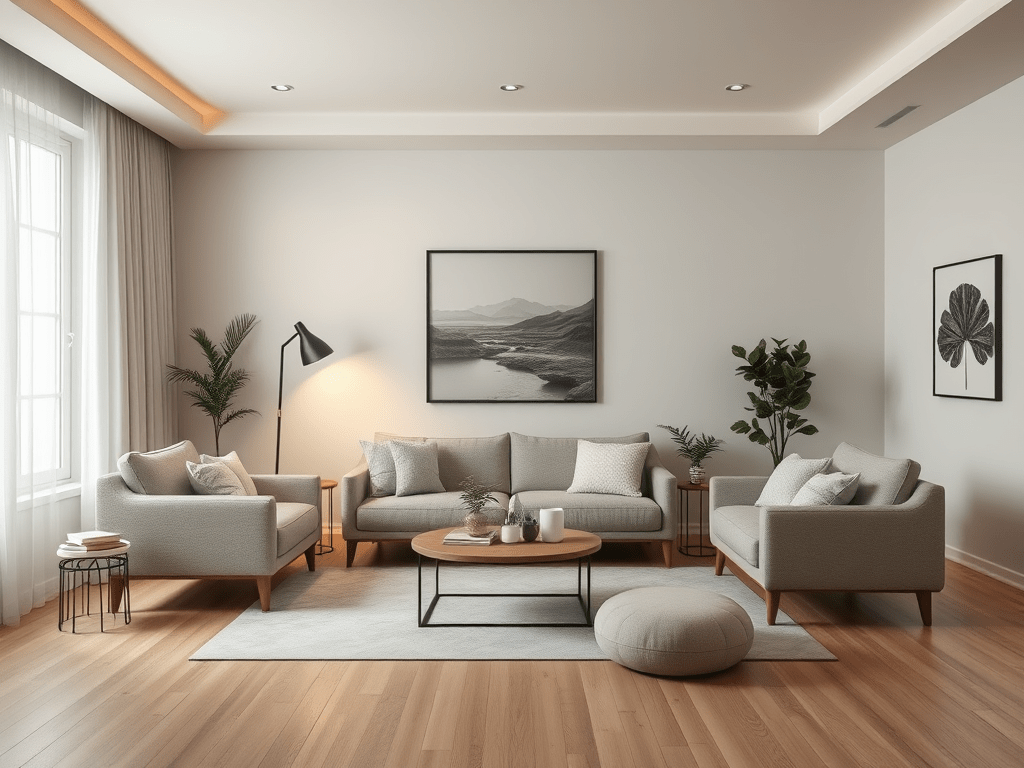
There are spaces that look beautiful.
And there are spaces that let you breathe.
They are not always the same.
You can have a perfectly designed room and still feel restless inside it.
Something feels off, even if you can’t explain why.
Because your nervous system doesn’t respond to trends.
It responds to signals.
Light. Texture. Sound. Distance.
The way a space holds you… or doesn’t.
Why Your Space Might Be Stressing You Without You Realizing
Most modern spaces are built for stimulation.
- bright overhead lighting
- visual clutter
- sharp contrasts
- constant noise
Your brain stays alert.
Even when you’re trying to rest.
It’s subtle, but constant.
And over time, it becomes exhausting.
What a Calming Space Actually Does
A calming space doesn’t try to impress you.
It reduces friction.
It tells your body:
you are safe enough to slow down
Not perfect. Not magical.
Just… safe enough.
1. Soften the Light
Light is one of the strongest signals your body receives.
Harsh lighting keeps you alert.
Soft lighting lets your system drop.
Choose:
- warm light (not white, not blue)
- indirect sources (lamps, not ceiling lights)
- multiple small lights instead of one strong one
You’re not lighting a room.
You’re shaping a state.
2. Remove Visual Noise
Clutter is not just physical.
It’s cognitive.
Every object competes for attention.
You don’t need an empty space.
You need a quiet one.
Keep:
- fewer objects
- softer shapes
- neutral or muted tones
Let your eyes rest.
Your mind follows.
3. Add One Anchor Object
Every calming space needs a center.
Something that grounds you.
It can be:
- a chair
- a blanket
- a corner with soft light
Not for decoration.
For presence.
A place where your body knows:
this is where I slow down
4. Introduce Soft Textures
Your nervous system doesn’t only see.
It feels.
Add:
- fabric
- softness
- warmth
A room without texture feels distant.
A room with texture feels human.
5. Reduce Invisible Stressors
Not everything you feel is visible.
Pay attention to:
- background noise
- echo
- harsh contrasts
Even small changes:
- curtains
- rugs
- soft materials
can change how a space feels entirely.
Objects That Help (Subtle, Not Obvious)
This is where function meets feeling.
You don’t need more things.
You need better ones.
- warm light lamps
- soft blankets
- subtle scent diffusers
- low, indirect lighting
Each one is a signal.
Together, they create a system.
A Final Thought
You don’t need to redesign your entire home.
Start with one corner.
One light.
One object.
A space doesn’t need to be perfect to help you.
It just needs to stop working against you.
 The Inner Room
Σχολιάστε